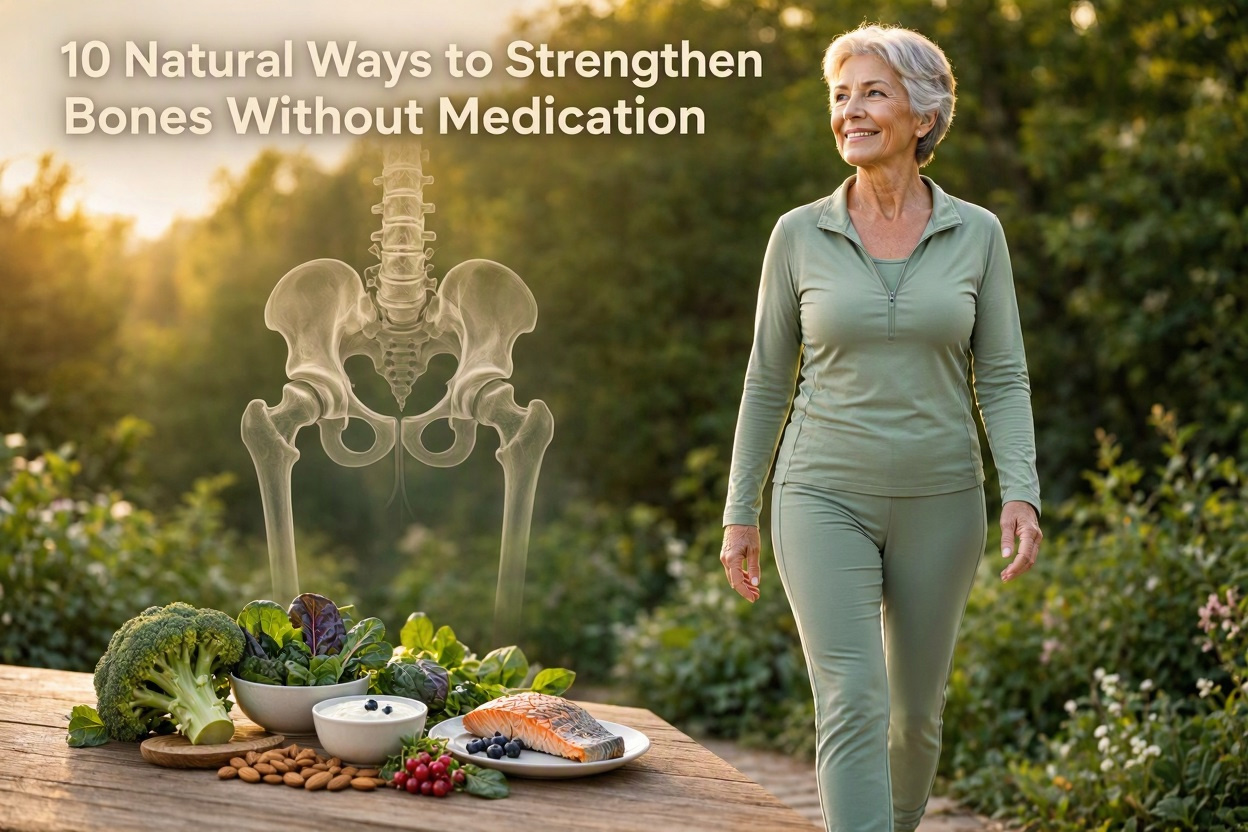
Most people give their bones very little thought until a doctor mentions a low bone density result or a friend suffers a fracture. Yet bone is living tissue. It is broken down and rebuilt throughout life, and the choices you make every day influence how that balance plays out. According to the Bone Health & Osteoporosis Foundation, roughly 54 million adults in the United States have osteoporosis or low bone mass, so this is a topic that affects a very large number of families.
The ten habits below are widely discussed in bone-health research and in guidance from major health organizations. None of them is a cure or a guarantee, and none replaces testing or treatment your doctor recommends. Together, though, they form a sensible foundation.
1. Move Your Body Against Gravity
Bones adapt to the loads placed on them. Weight-bearing activities such as brisk walking, hiking, stair climbing, and dancing, along with muscle-strengthening work, give bones a reason to stay dense. A good target for most healthy adults is some form of weight-bearing activity on most days of the week. If you already have osteoporosis or have had a fracture, ask your clinician which movements are safe for you.
2. Make Sure You Get Enough Calcium
Calcium is the main mineral in bone. Adults generally need about 1,000 mg a day, rising to about 1,200 mg for women over 50 and men over 70. Food comes first: dairy products, canned fish with soft bones, tofu made with calcium, and leafy greens such as kale and bok choy all contribute. Supplements fill gaps for some people, but more is not better, so discuss amounts with your doctor.
3. Do Not Overlook Vitamin D
Vitamin D helps your body absorb calcium from food. Many adults need 600 to 800 IU a day from all sources, and some need more if a blood test shows a deficiency. Sunlight, fatty fish, egg yolks, and fortified foods all help. Because needs vary with skin tone, latitude, age, and health conditions, a blood test and professional advice are better guides than guesswork.
4. Pay Attention to Vitamin K
Vitamin K takes part in the proteins that bind calcium into bone. Leafy greens are the best-known source of vitamin K1, while fermented foods and some cheeses provide vitamin K2. The research on K2 supplements is still developing. Importantly, anyone taking warfarin or similar blood thinners should speak with their doctor before changing vitamin K intake, including from food.
Want a Structured Bone-Health Routine?
The Bone Density Solution is a digital guide that organizes bone-health habits into a 14-step plan. Review the official page for current details and terms.
See The Bone Density Solution – $495. Include Magnesium-Rich Foods
Roughly half or more of the body's magnesium is stored in bone, and the mineral helps the body use vitamin D. Pumpkin seeds, almonds, black beans, avocado, whole grains, and cooked leafy greens are all useful sources. Food is the safest route; high-dose magnesium supplements can cause digestive upset and are not right for people with kidney disease.
6. Eat Enough Protein
Bone is built on a protein framework, and adequate protein also protects the muscle that supports your skeleton and helps prevent falls. Fish, eggs, poultry, beans, lentils, yogurt, and tofu are all good choices. Spreading protein across your meals tends to work better than eating most of it at dinner.
7. Eat Anti-Inflammatory, Whole-Food Meals
Long-term, low-grade inflammation has been linked in studies with faster bone loss. While diet is only one piece of the puzzle, patterns rich in vegetables, fruit, legumes, nuts, olive oil, and fish are associated with better overall health. Cutting back on heavily processed foods and sugary drinks is an easy first step.
8. Stop Smoking and Moderate Alcohol
Smoking is associated with lower bone density and a higher fracture risk. Heavy drinking also raises the risk of bone loss and falls. If you smoke, quitting is one of the most useful steps you can take for your bones, your heart, and your lungs. For alcohol, current guidance for most adults is no more than one drink a day for women and two for men, and less is better.
9. Protect Your Sleep and Manage Stress
Long-term high levels of the stress hormone cortisol can interfere with bone formation, and poor sleep affects hormones, balance, and mood. Aiming for seven to nine hours of sleep and building in relaxation such as walking outdoors, breathing exercises, or gentle yoga supports your overall health and, indirectly, your bones.
10. Know Your Risk and Get Tested When Appropriate
Habits matter, but so does information. A bone density scan (DEXA) and a fracture-risk assessment can show where you stand. Screening is generally recommended for women at 65, for men at around 70, and sooner for people with risk factors such as early menopause, long-term steroid use, a family history of hip fracture, or a previous fragile-bone fracture. If medication is recommended, lifestyle changes work alongside it rather than instead of it.
Final Thoughts
Supporting your bones is not about one miracle food or workout. It is about steady habits, repeated over years: moving regularly, eating a varied diet, avoiding tobacco, and staying in touch with your healthcare team. Pick one or two ideas from this list, make them routine, and add more when you are ready.
If you would like a guided format, The Bone Density Solution is a digital guide attributed to Shelly Manning that walks through nutrition, movement, and lifestyle topics in a 14-step structure. It is educational material, not medical treatment, and the 60-day money-back guarantee is described on the official purchase page.
This article is for general education only and is not medical advice. Talk with your doctor or another qualified healthcare professional before changing your diet, exercise routine, supplements, or medications.
Build Bone-Friendly Habits at Your Own Pace
Explore a step-by-step digital guide covering nutrition, gentle movement, and daily routines.
Get Instant Access – Only $49