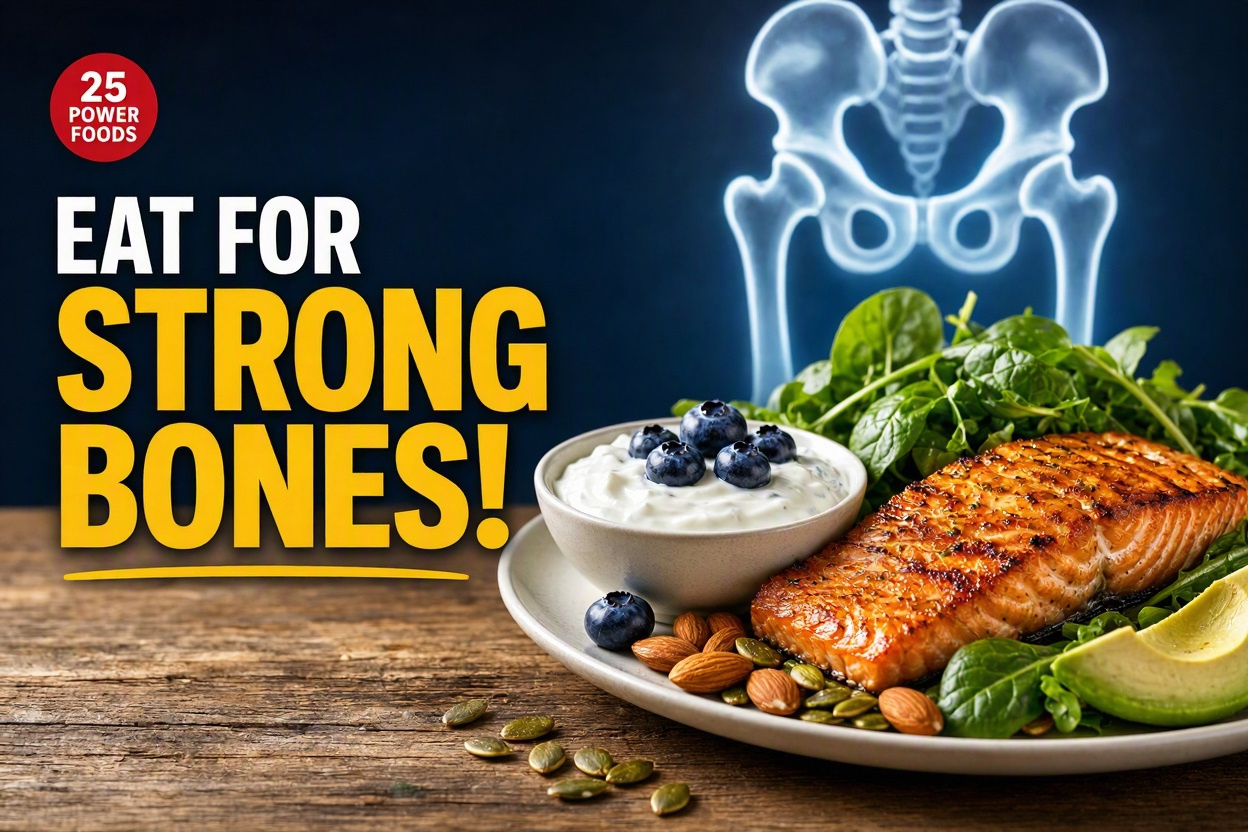
Healthy bones start on your plate. Calcium builds the mineral structure of bone, vitamin D helps you absorb it, vitamin K and magnesium help your body use it, and protein supports the framework. The good news is that foods rich in these nutrients are easy to find and easy to cook. Below are 25 foods, grouped by nutrient, followed by five simple recipes and a few planning tips.
Top 10 Calcium-Rich Foods
- Plain yogurt — about 300 to 400 mg per cup, depending on the type
- Milk or fortified plant milk — roughly 300 mg per cup (check the label)
- Cheese — hard cheeses such as cheddar and Swiss are especially rich
- Canned sardines with bones — calcium and vitamin D in one food
- Canned salmon with bones — mash the soft bones into salmon patties
- Calcium-set tofu — look for calcium sulfate on the label
- Collard greens and bok choy — calcium that the body absorbs well
- Kale — a lower-oxalate green with good absorption
- Chia seeds and tahini — easy to add to smoothies and dressings
- Almonds and white beans — smaller amounts that add up over the day
Note that spinach contains a lot of calcium but also oxalates that block most of it from being absorbed, so it is better thought of as a source of magnesium and vitamin K.
5 Vitamin D Sources
- Salmon — one of the richest food sources
- Trout — a mild fish that is high in vitamin D
- Sardines and mackerel — also provide omega-3 fats
- Egg yolks — a small but useful amount
- Fortified foods — many milks, plant milks, and cereals are fortified
Sunlight and supplements also contribute to vitamin D status, and food alone often falls short, so ask your doctor whether a blood test makes sense.
5 Vitamin K Sources
- Kale — a standout source of vitamin K1
- Broccoli — lightly steamed or roasted
- Natto — fermented soybeans, the richest food source of K2
- Aged cheeses such as Gouda and Brie — provide K2
- Brussels sprouts — roast with olive oil for better flavor
If you take warfarin, keep your vitamin K intake steady from day to day and follow your doctor's guidance.
Want More Structure for Everyday Eating?
The Bone Density Solution is a digital guide that covers bone-related nutrition topics within a 14-step plan. Review the official page for what is included.
Learn More – Only $495 Magnesium-Rich Foods
- Pumpkin seeds — one of the most concentrated sources
- Almonds and cashews — a handful makes a useful snack
- Black beans and lentils — also provide fiber and plant protein
- Avocado — magnesium and potassium together
- Dark chocolate (70 percent or higher) — enjoy a small square
5 Easy Bone-Friendly Recipes
These recipes use common ingredients and take very little time. Adjust portions and ingredients for your own dietary needs and any allergies.
1. Berry Yogurt Bone Bowl (Breakfast)
Ingredients:
- 1 cup plain Greek yogurt
- ¼ cup fresh or frozen berries
- 2 tbsp sliced almonds
- 1 tbsp pumpkin seeds
- 1 tsp honey (optional)
Why it works: Yogurt supplies calcium and protein, almonds and seeds add magnesium, and berries bring vitamin C. Ready in 3 minutes.
2. Sardine and Avocado Toast (Lunch)
Ingredients:
- 2 slices whole-grain bread
- 1 can sardines in olive oil, with bones
- ½ ripe avocado
- Squeeze of lemon
- Black pepper and a pinch of chili flakes
Why it works: Sardines with their soft bones provide calcium and vitamin D, avocado adds magnesium and healthy fats, and the meal keeps you full.
3. Baked Salmon With Garlic Kale and Almonds (Dinner)
Ingredients:
- 1 salmon fillet
- 2 cups chopped kale
- 1 clove garlic, sliced
- 1 tbsp olive oil
- 2 tbsp toasted almonds
- Lemon wedges
Why it works: Salmon is a natural source of vitamin D and omega-3 fats, while kale contributes vitamin K and calcium that is well absorbed.
4. Almond Butter Apple Slices (Snack)
Ingredients:
- 1 apple, sliced
- 2 tbsp almond butter
- 1 tsp chia seeds
- Pinch of cinnamon
Why it works: A quick snack with magnesium from almonds, calcium from chia, and fiber from the apple.
5. Berry Kefir Smoothie
Ingredients:
- 1 cup plain kefir
- ½ cup frozen berries
- 1 tbsp ground flaxseed
- 1 tbsp tahini
- ½ banana
Why it works: Kefir brings calcium and live cultures, tahini adds more calcium, and flaxseed adds fiber and plant omega-3s.
Meal Planning Tips
Aim to include a calcium source at each meal, such as yogurt at breakfast, tofu or beans at lunch, and greens at dinner. Keep canned fish, nuts, seeds, and frozen vegetables on hand for quick meals. Spread calcium through the day, because the body absorbs it best in amounts of about 500 mg or less at a time. Batch-cook beans and grains on the weekend, and prepare snack boxes of nuts and fruit so the healthy choice is the easy one.
Foods and Drinks to Limit
You do not need to give up everything you enjoy, but some choices are worth moderating: very salty processed foods, sugary soft drinks, heavy alcohol use, and large amounts of caffeine. High salt intake raises calcium loss in urine, and filling up on low-nutrient foods can crowd out the calcium-rich ones. Balance matters more than perfection.
Final Thoughts
Eating for your bones is less about special products and more about steady, enjoyable meals built around dairy or fortified alternatives, fish, beans, nuts, seeds, and vegetables. If you would like a guided format that also covers movement and lifestyle habits, The Bone Density Solution is a digital educational guide you can review. Those with kidney disease, food allergies, or other health conditions should check with their doctor or a registered dietitian before changing their diet.
This article is for general education only and is not medical advice. Talk with your doctor or another qualified healthcare professional before changing your diet, exercise routine, supplements, or medications.
Build Meals That Support Your Bones
Explore a digital guide that pairs bone-friendly nutrition with movement and daily habits.
Get Instant Access – Only $49