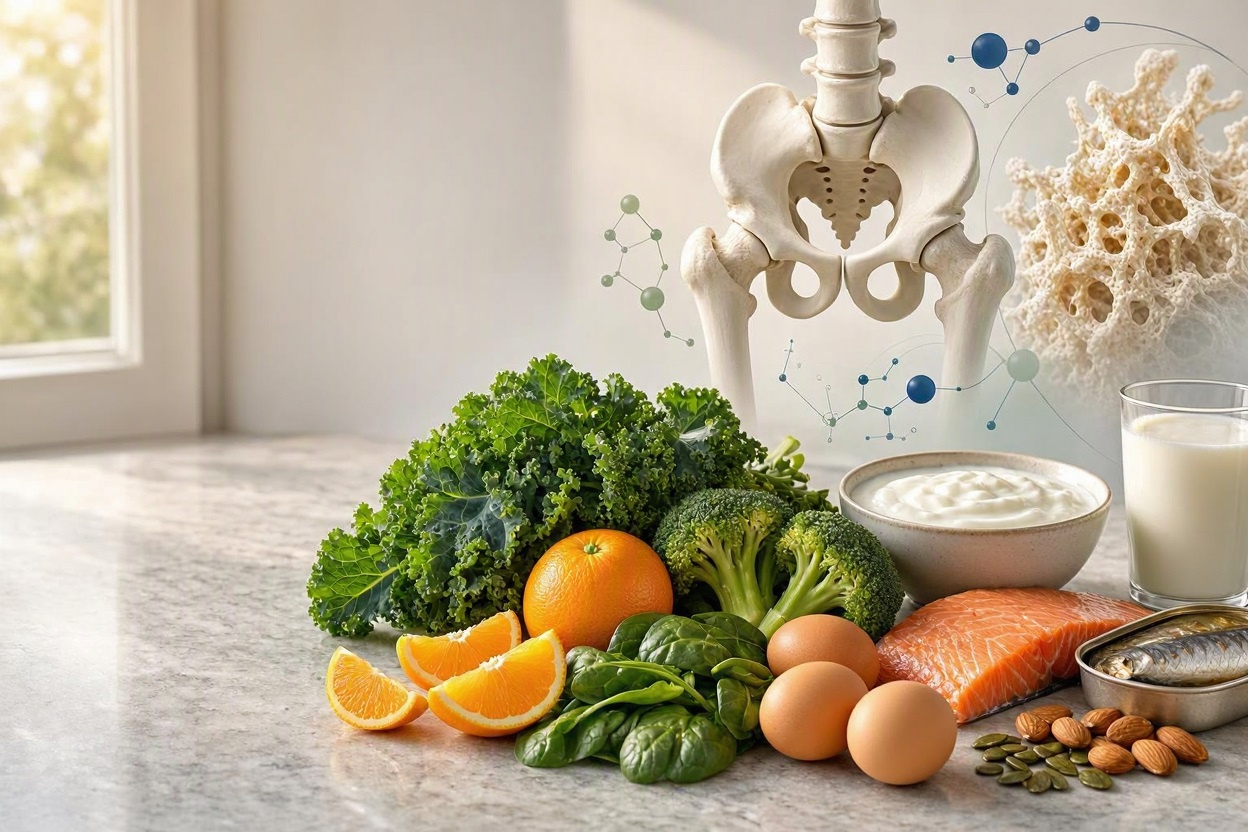
When people think about bone nutrition, calcium usually comes to mind first, and for good reason: bone is about 99 percent of the body's calcium store. But calcium cannot do the job alone. Building and maintaining bone also depends on a group of vitamins and minerals that help you absorb calcium, put it in the right place, and form the protein framework around it. Here are seven worth knowing about, with practical food sources and cautions.
1. Vitamin D: Helping You Absorb Calcium
Vitamin D enables the gut to absorb calcium efficiently. Without enough of it, the body may pull calcium from bone to keep blood levels normal. The recommended intake is 600 IU a day for most adults up to age 70 and 800 IU after that, though some people need more. Food sources include salmon, trout, sardines, egg yolks, fortified milk and plant milks, and UV-exposed mushrooms. The upper limit for adults is generally 4,000 IU a day, so high-dose products should be taken only with medical guidance.
2. Vitamin K: Guiding Calcium Into Bone
Vitamin K activates proteins, including osteocalcin, that help bind calcium into bone. Vitamin K1 is abundant in spinach, kale, broccoli, and other greens, while K2 is found in natto, some aged cheeses, and egg yolks. Studies on K2 supplements and fracture prevention have had mixed results, so food sources are the safer starting point. If you take warfarin, speak with your doctor before changing how much vitamin K you eat or take.
3. Magnesium: A Quiet Helper
Magnesium is part of the bone crystal structure and is needed to convert vitamin D into its active form. Adult women need roughly 310 to 320 mg a day and men about 400 to 420 mg. Pumpkin seeds, almonds, cashews, black beans, spinach, avocado, and whole grains are good sources. Supplemental magnesium can cause loose stools and is not appropriate for everyone, particularly people with kidney problems.
Want Help Putting Nutrition Into Practice?
The Bone Density Solution is a digital guide that covers bone-related nutrients along with movement and lifestyle habits. Confirm current contents on the official page.
See Details – Only $494. Boron: A Trace Mineral Still Being Studied
Boron is a trace element that appears to influence how the body handles calcium, magnesium, and vitamin D. Research in humans is limited, and no official recommended daily amount exists. It is found in prunes, raisins, apples, avocados, almonds, and legumes. Because evidence is thin, eating these foods is reasonable, but high-dose boron supplements are not advisable without a doctor's guidance; the adult upper limit is 20 mg a day.
5. Zinc: Supporting Bone Remodeling
Zinc is needed by the cells that build bone and for making the collagen framework. Adults need about 8 mg (women) to 11 mg (men) daily. Oysters, beef, pumpkin seeds, chickpeas, lentils, and cashews are rich sources. Taking more than 40 mg a day from supplements can interfere with copper absorption, so more is not better.
6. Vitamin C: Building the Collagen Framework
About a third of bone by volume is collagen, and your body needs vitamin C to make it. Citrus fruit, strawberries, kiwi, bell peppers, and broccoli provide plenty. Observational studies link higher vitamin C intake from food with better bone density, but this does not prove cause and effect. A varied diet of fruit and vegetables usually covers the need of 75 mg (women) or 90 mg (men).
7. Omega-3 Fatty Acids: Supporting a Healthy Inflammatory Balance
Omega-3 fats from oily fish help regulate inflammation, and some research suggests a possible link with bone health, though clinical trials have been inconsistent. Eating fish such as salmon, sardines, and mackerel twice a week is recommended for heart health anyway, and it also delivers vitamin D. Walnuts, flaxseed, and chia provide a plant form called ALA.
Food Sources at a Glance
- Vitamin D: salmon, trout, sardines, egg yolks, fortified milk
- Vitamin K: kale, spinach, broccoli, natto, aged cheese
- Magnesium: pumpkin seeds, almonds, black beans, avocado
- Boron: prunes, raisins, apples, legumes
- Zinc: oysters, beef, chickpeas, cashews
- Vitamin C: citrus, strawberries, bell peppers, kiwi
- Omega-3: salmon, sardines, mackerel, walnuts, flaxseed
Using Supplements Safely
Supplements can help when food falls short or when a blood test shows a deficiency, but they can also cause harm in the wrong amount or with certain medicines. Tell your doctor or pharmacist about everything you take, check that products are tested by a third party, and stay below the established upper limits unless advised otherwise. Calcium supplements in particular are best taken in smaller doses, since the body absorbs limited amounts at one time.
Final Thoughts
Strong bones are built from a team of nutrients, not a single star. A varied diet with dairy or fortified alternatives, vegetables, legumes, nuts, fish, and fruit covers most needs for most people. If you want a guided overview, The Bone Density Solution is a digital educational guide that includes bone-nutrition topics within a 14-step format.
This article is for general education only and is not medical advice. Talk with your doctor or another qualified healthcare professional before changing your diet, exercise routine, supplements, or medications.
Learn More About Bone-Friendly Nutrition
Explore a digital guide that brings nutrients, meals, and daily habits together in one place.
Get Instant Access – Only $49